
Starting the Week Strong: Trail Running, UTMB Inspiration and the Road to 100 Miles
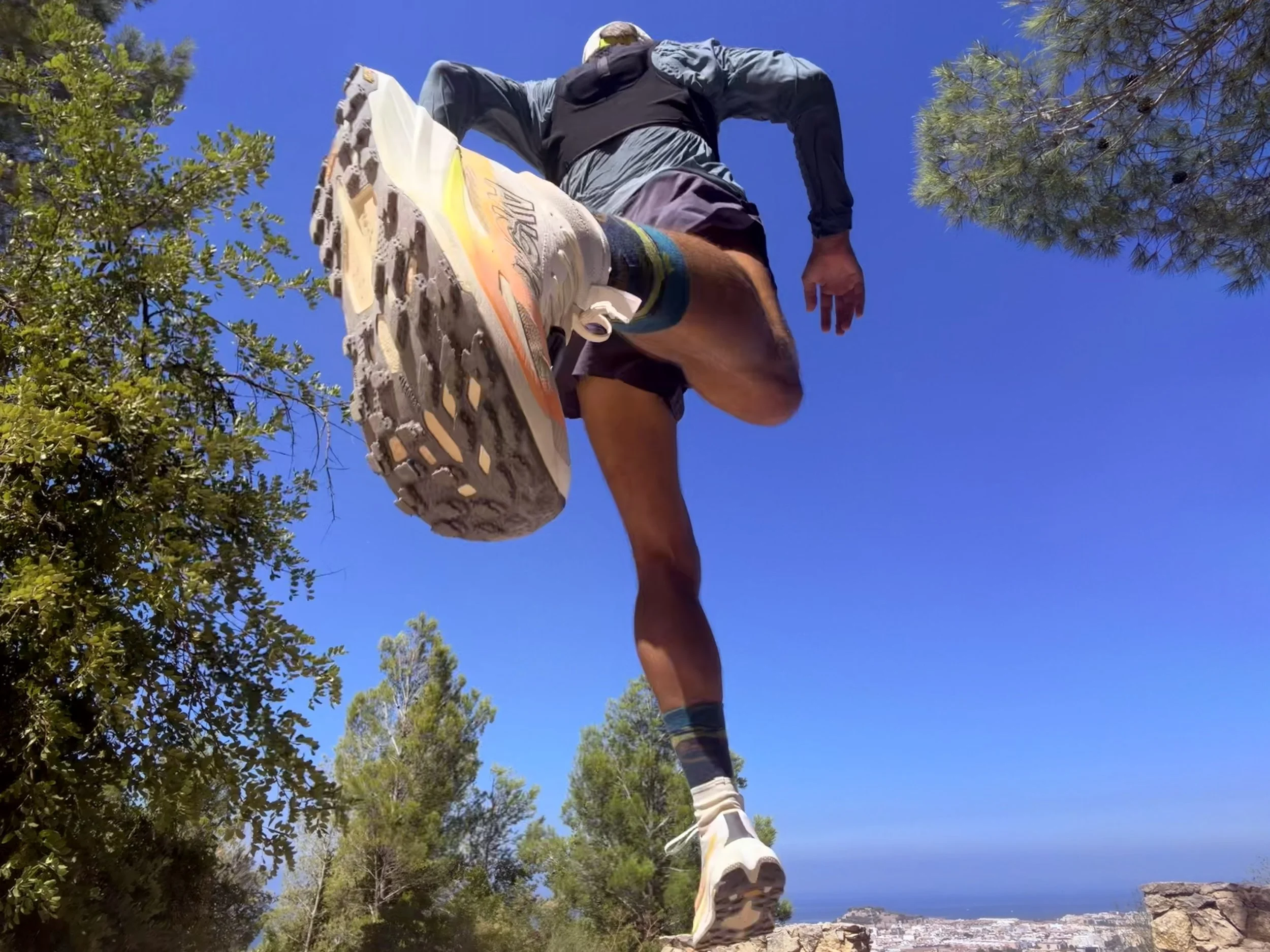
Me running today
There’s something particularly satisfying about finishing a good training session, climbing into a hammock and knowing you’ve put in the work.
That’s where I am today — workout finished, relaxing in the hammock, and reflecting on a run that I’m really pleased with.
I changed my usual route today by extending the downhill section. Part of the extension was on the road, which isn’t always my favourite thing, but it also gave me some additional elevation change. I’m trying to become increasingly comfortable with adapting my training routes and making the most of whatever terrain is available.
And today, I was happy with the result.
A little celebration for Nick Fowler
During the run, I also had a bit of fun and did a celebration dance for Nick Fowler, who recently set a new Fastest Known Time (FKT) on the Pacific Crest Trail, completing the route self-supported while also breaking the overall record.
That self-supported aspect is particularly impressive. There’s something very appealing to me about the challenge of carrying what you need, managing your own nutrition and hydration, making your own decisions and being completely responsible for getting yourself from start to finish.
These are the performances that remind me just how extraordinary ultrarunning can be.
I’ve also been listening to interviews on Ultra Runner Podcast, including conversations with Max King and Ellie Greenwood. Listening to athletes like these makes me think about just how much ultramarathon running has evolved.
Ellie Greenwood winning Western States in 2011 doesn’t actually feel that long ago, yet when you look at where the sport is now, the progression is incredible.
The depth of talent, the training, the nutrition, the equipment, the race strategies and, perhaps most importantly, the understanding of how to run these distances have all moved forward enormously.
UTMB, CCC and the evolution of ultramarathon running
Watching UTMB over the weekend was another reminder of this.
The way the leading men and women were descending was simply inspiring.
When you watch the best ultrarunners in the world moving efficiently and confidently down technical descents after already running enormous distances, you start to appreciate what it takes to win a 100-mile ultramarathon.
It isn't simply about being able to run for a long time.
It's about developing the ability to climb efficiently, descend with confidence, fuel consistently, manage fatigue, make good decisions when you're tired and keep moving when your body is telling you to stop.
I also watched CCC, the 100-kilometre race, and was hugely impressed by everyone who took part.
The performances from the top three women and top three men were astounding, but so were the performances throughout the field.
That’s one of the things I love about ultrarunning. Yes, the elite performances are extraordinary, but every person on that start line has their own challenge, their own reason for being there and their own finish line to reach.
7,000–8,000 feet of elevation — all running
I've also been thinking about last week's training.
I gained approximately 7,000–8,000 feet of elevation, and what made me particularly pleased was that I did it all running.
There was very little — if any — hiking involved.
For my own training, that's an important marker.
Elevation is one thing. Being able to gain that elevation while continuing to run is another.
It gives me confidence that the work I'm putting into my climbing fitness and running strength is starting to translate into the terrain.
And that's really what training is about: not just completing individual workouts, but gradually becoming a stronger, more capable runner.
Managing the heat
Today was relatively pleasant, although it was still quite hot.
I was wearing a long-sleeved HOKA T-shirt, and fortunately there’s a water fountain on the route.
After a few repetitions of running up and down the hill, I stopped to wet my arms and cool myself down before continuing.
Learning how to manage heat, hydration and effort is another important part of endurance training, particularly if you're preparing for a long trail race or ultramarathon.
Sometimes the small decisions you make during training — when to slow down, when to drink, when to cool yourself down and when to back off — are exactly the skills you need on race day.
A little tightness I'm keeping an eye on
I have noticed some tightness around my left inner thigh and groin area, so I'm going to be sensible about it.
Rather than simply ignoring it and hoping it disappears, I'm going to give myself some proper recovery time after each run and see if I can work out what's contributing to it.
Interestingly, I've noticed that when I massage my left glute with a firm cork ball, the discomfort sometimes goes away.
That makes me wonder whether some of the tightness could be coming from the glute rather than directly from the area where I feel it.
I'm not going to jump to conclusions, though. For now, it's a case of paying attention, allowing enough recovery and figuring out what works.
One of the most important lessons I've learned through endurance running is that training hard and recovering well have to go together.
The goal for this week
I'm pleased with the way I've started the week.
My goal is still to swim 1 kilometre in the ocean every day.
I also joined a gym on Sunday, so I'll be getting in two gym sessions this week alongside my running and swimming.
The goal isn't to do everything as hard as possible.
It's to build consistency.
Running more efficiently. Getting stronger. Improving my climbing and descending. Developing better endurance. Recovering properly. And gradually putting all those pieces together.
That's the same approach I encourage with the runners I coach.
Whether your goal is your first trail race, a marathon, a 50K, 100K or a 100-mile ultramarathon, progress comes from putting the right training together consistently — and knowing when to push and when to recover.
Want help with your running?
If you're inspired by UTMB, Western States, CCC or the world of trail and ultramarathon running but you're not sure how to structure your own training, running coaching can make a huge difference.
As a run coach, I work with runners to create training that is specific to their goals, experience, terrain and lifestyle.
That might mean preparing for your first trail race, improving your marathon performance, building the endurance required for an ultramarathon, becoming stronger on hills and descents, or simply becoming a more consistent and confident runner.
If you're ready to take your running to the next level, get in touch about Run Coaching.
Let's build a training plan that gets you where you want to go — one run at a time.
