
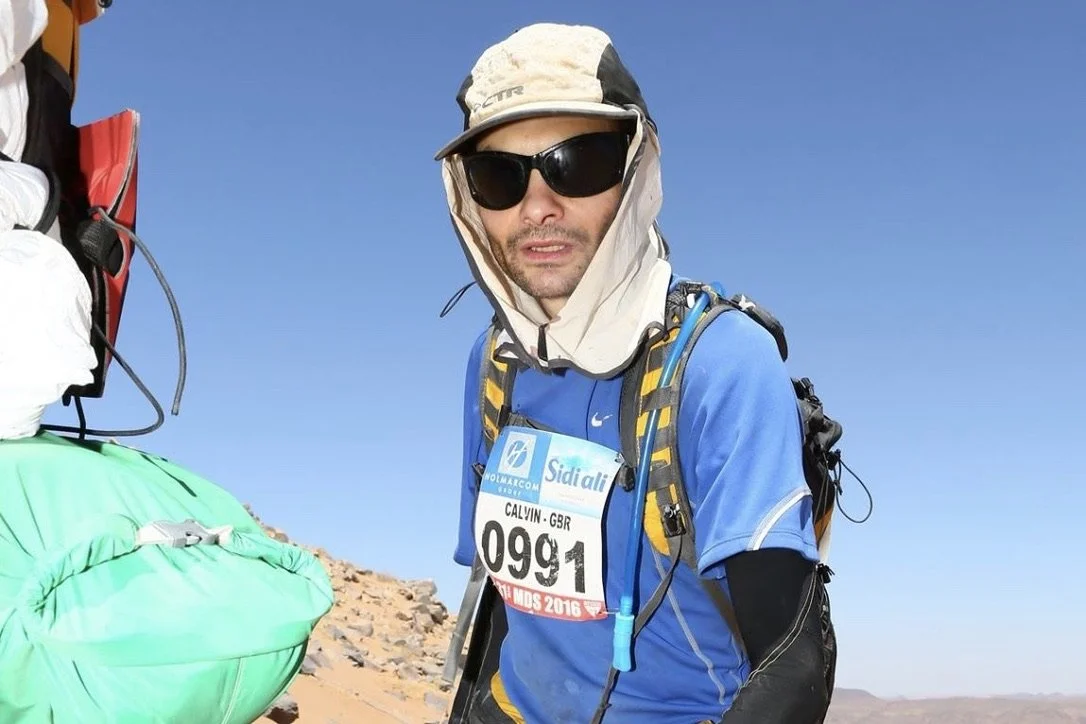
Photo of Calvin, a runner coached by me Kristian Morgan.
The Marathon des Sables (MDS) is one of those epic challenges of a lifetime. This multistage race through the Sahara Desert covers approximately 250 kilometres (150 miles) over six days.
Runners must carry their own food, sleeping equipment and essential supplies throughout the race. It is a true test of endurance, mental strength and preparation, attracting competitors from all over the world.
I completed the Marathon des Sables in 2016, finishing third among the British runners and 22nd overall. Along the way, I learned many valuable lessons that I would pass on to anyone preparing for this incredible challenge.
Here are my top 10 tips to help you prepare for the Marathon des Sables.
1. Lighten Your Pack
Aim to get your running pack as light as possible while still carrying everything you need. Always check the regulations for your race edition to ensure your pack meets the required minimum and maximum weights. Remember to account for water separately according to the race rules.
Trust me, a lighter pack can make a huge difference over six days of running in the desert. Every unnecessary gram adds up, so be ruthless when deciding what to take.
2. Get the Right Kit
Decide early on which kit you will take and practise wearing it during training. Don't turn up in Morocco with brand-new, untested equipment.
Your running clothes, socks, trainers and pack all need to be tried and tested. Something that feels comfortable on a short run at home could cause chafing, blisters or discomfort over several hours in the desert.
Use your training runs to identify any problems and make adjustments well before race day.
3. Become Heat Acclimatised
The Marathon des Sables takes place in the desert, where temperatures can be extremely high. Preparing your body for running in hot conditions can make a real difference to your performance.
I took my running kit with me on holiday in Thailand and practised running during the hottest part of the day. This gave me valuable experience of running in the heat before heading to the Sahara.
Build up your exposure gradually, stay hydrated and avoid pushing too hard in dangerous conditions. Heat acclimatisation needs to be approached carefully, particularly if you are not used to running in hot weather.
4. Choose the Right Food
Decide what food you will eat during the race and test everything well in advance. Your food needs to provide enough energy for repeated days of running while being lightweight, easy to prepare and suitable for your stomach.
The last thing you want is to discover in the middle of the Sahara that your chosen meals don't agree with you.
Experiment with your race food during long training runs and consecutive training days. Practise your fuelling strategy and make sure you know how much food you need for each stage.
5. Join the Marathon des Sables Community
Make use of the experience of runners who have already completed the Marathon des Sables. Online communities and dedicated MDS Facebook groups are great places to ask questions, learn from other competitors and pick up practical advice.
You may also make some great friends along the way. Connecting with other runners before the race could even lead to meeting up for a training run.
There is so much to learn from people who have already experienced the challenges of carrying a pack, managing their feet and coping with the desert conditions.
6. Invest in Good Gaiters
Good gaiters are essential for helping to prevent sand from getting into your trainers. Sand can cause irritation and contribute to painful blisters during a multiday desert race.
I saw just how badly damaged feet could become during MDS. Some runners in my tent struggled so much with blisters that they were unable to continue.
I used the stitched-on Velcro method, paired with Raidlight gaiters, and it worked well for me. I had the stitching done professionally by a tailor.
Whichever system you choose, test it thoroughly before race day. Make sure your gaiters fit securely, keep sand out and work well with your chosen trainers.
7. Make Sure Your Trainers Fit Properly
Getting your footwear right is essential for the Marathon des Sables. Your feet can swell during long runs and in hot conditions, so make sure your trainers have enough room for your toes.
As a starting point, allow around half a centimetre or more between your longest toe and the front of the shoe. Check the fit during long training runs, as the ideal amount of room depends on your foot shape and how your feet respond to heat and distance.
Shoes that are too small can lead to painful pressure, bruised toenails and lost toenails. Shoes that are too large can allow your feet to slide, increasing friction and the risk of blisters.
I was fortunate not to have any problems with my feet during MDS. Test your footwear over long distances, on varied terrain and with the socks you intend to race in.
8. Know the Course and Cut-Off Times
Learn as much as you can about each stage before arriving at the race. Understand the distances, terrain, checkpoints and cut-off times, and make sure you know the consequences of missing a deadline.
The Marathon des Sables is not simply about running as fast as possible. You need to manage your pace, energy and recovery while ensuring you reach the required checkpoints on time.
Knowing what lies ahead also helps you prepare mentally. When you understand the demands of each stage, you can break the race down into manageable sections rather than feeling overwhelmed by the full distance.
Always check the official race information for your edition, as stage distances, checkpoint arrangements and cut-off times can vary.
9. Train with Back-to-Back-to-Back Runs
One of the best ways to prepare for a multiday ultramarathon is to practise running on tired legs.
During my preparation for MDS, I used back-to-back-to-back runs to experience what it was like to run on consecutive days without fully recovering between sessions. It worked well for me, and I even enjoyed the challenge.
This type of training helps you practise pacing, fuelling and managing fatigue while learning how your body responds to repeated days of exercise.
Build up gradually and make sure your training is appropriate for your experience and current fitness. The aim is to arrive at the start line strong and healthy, not exhausted from training.
10. Train with Your Pack
Practise running with the pack you intend to use during the Marathon des Sables. You don't need to carry the full race weight on every run, but you do need to understand how the pack feels over different distances and terrain.
Start with a lighter load and gradually introduce longer runs and heavier weights as your body adapts. Practise adjusting the straps, accessing your food and water, and managing any rubbing or discomfort.
Your pack will affect your posture, running economy and comfort, particularly over long distances. Training with it gives you time to make adjustments before the race rather than discovering problems in the Sahara.
Don't turn up to MDS without ever having experienced what it feels like to run with a pack on your back.
Final Thoughts
I hope these 10 Marathon des Sables tips help you prepare for your own journey towards the start line.
There are many things to consider when preparing for a multistage desert ultramarathon, but getting your pack weight, kit, heat preparation, nutrition, footwear and training right will give you a solid foundation.
I completed the Marathon des Sables in 2016, finishing third among the British runners and 22nd overall. The experience taught me valuable lessons, and I hope sharing them helps you avoid a few mistakes along the way.
Prepare well, trust your training, respect the desert and, above all, enjoy the experience.
I wish you the very best of luck with your Marathon des Sables journey.
Kristian Morgan
Ultra-Running Coach and Athlete
