
500 Feet at a Time: A Trail Runner’s Day in the Mountains
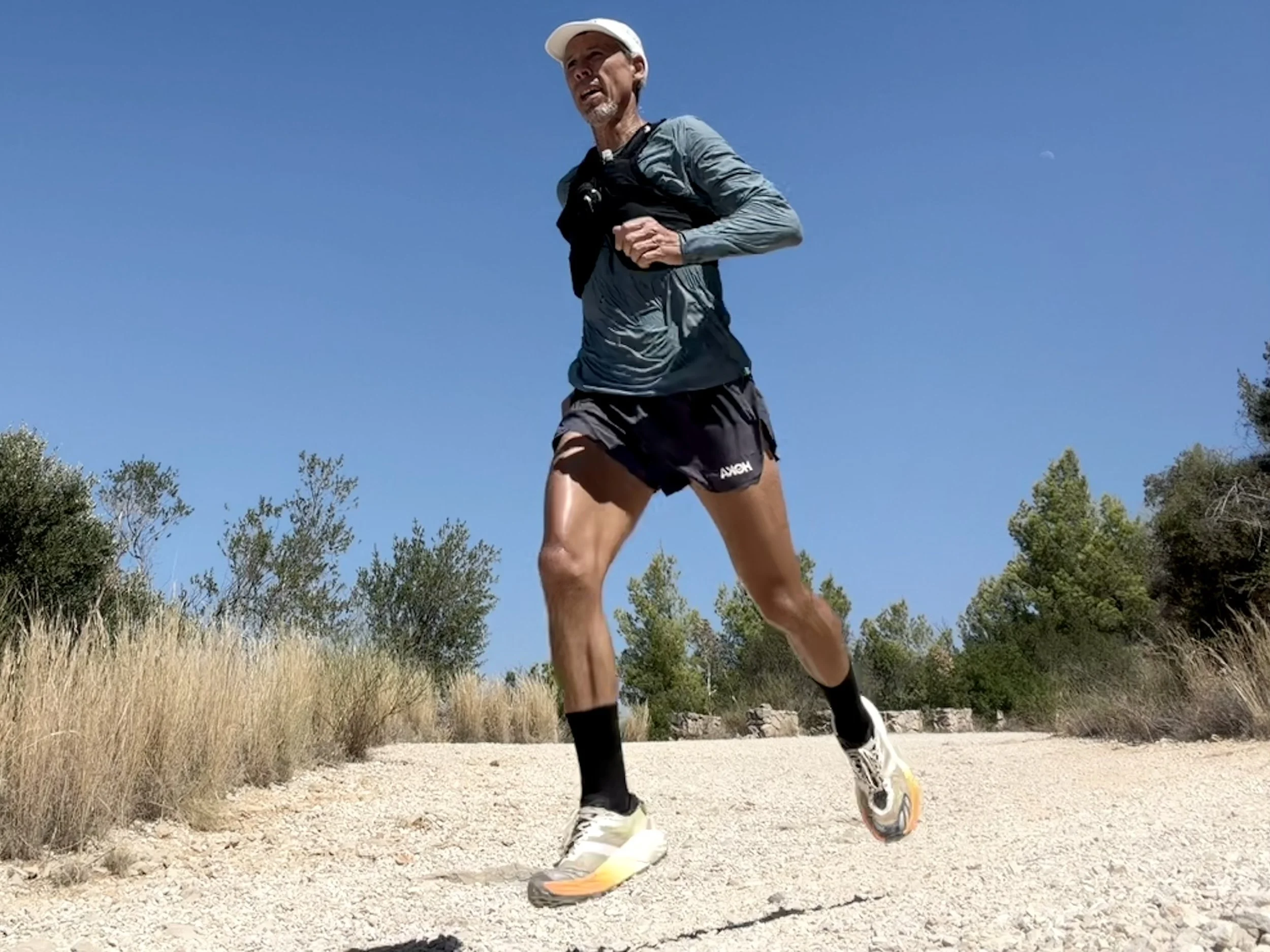
Yesterday I promised myself I would wake at sunrise—at that first moment of consciousness when my mind says, it’s time to get up.
Well… I woke up, and then went straight back to sleep.
I eventually got up at 9:00am.
Sometimes the plan doesn't quite survive contact with reality.
But once I was heading towards the mountains, everything changed.
The green of the landscape waking up my eyes does more for me than the sound of any alarm clock ever could. There is something about heading into the mountains that makes me feel alive, rejuvenated and ready to move.
As I got closer to the trail, I could hear the cicadas and the rhythmic buzzing around my head. The mountains were already alive.
And so was I.
500 ft at a time
Today I wasn't experimenting with the session. I had a simple objective:
Gain 500 feet of elevation on every climb.
The climb was just over a mile long. Once I reached the top, I lapped my watch, turned around and ran back down to the start.
Then I did it again.
And again.
Three repeats in total.
By the end, I'd covered roughly 6 miles and accumulated around 1,500 feet of elevation gain.
It's a simple workout, but these are exactly the kinds of sessions I enjoy. There's no hiding on a climb. You have to keep moving upwards, managing your effort, finding your rhythm and accepting that the top is still a long way away when your legs start asking questions.
And it got me thinking about specificity.
If I were to run 100 miles on this particular stretch of trail, I'd accumulate roughly 25,000 feet of elevation gain.
That's getting surprisingly close to the distance-to-elevation ratio of the race I have coming up in December with UTMB in Chiang Mai Thailand.
That makes a local trail suddenly feel like a very useful training ground.
The mountains don't need to look like the race course to be valuable. What matters is that I can reproduce the demands: climbing, descending, accumulating elevation, managing fatigue and continuing to move efficiently when the legs are getting tired.
That's a big part of ultramarathon training.
Inspired by the best
There's another reason I found myself running every climb today instead of hiking some of the steeper sections.
I've been watched the racing at UTMB this past week, particularly the athletes at the front of the pack.
Watching those guys attack the climbs is inspiring.
There's something fascinating about seeing elite trail runners make decisions that most of us wouldn't even consider possible. They run when we'd hike. They keep moving when we'd stop. They make the mountains look different.
And sometimes watching someone else perform at that level changes the way you approach your own training.
Today, it made me want to run the climbs.
So I did.
But there's another lesson that came afterwards.
Knowing when to stop
My inner left thigh is a little tender today.
I've had this particular problem on and off for several years. Sometimes it's just a mild ache; occasionally there's a sharper pain. I've learned to manage it, and it hasn't stopped me from doing some pretty big things—including completing the Appalachian Trail twice, once northbound and once southbound.
Both of those efforts remain among the fastest times recorded for their respective directions.
Today, though, I'm listening to my body.
I spent 20 minutes icing it, and now I'm lying in the hammock wondering whether I should go swimming or simply let the area rest.
And my buddy has given me some very clear advice:
Rest.
So that's what I'm going to do.
Even though I've already done my run.
That's one of the things experience teaches you.
Training isn't about winning every single day.
It's about knowing when to push, when to back off, and how today's decision affects the athlete you want to be weeks or months from now.
The mountains will still be there tomorrow.
And so will I.
Want to train smarter for your next ultra?
If you're preparing for a mountain ultra, 50K, 100K or beyond, ultramarathon coaching can help you turn your training into a plan that develops the climbing strength, endurance, pacing and resilience your race demands.
